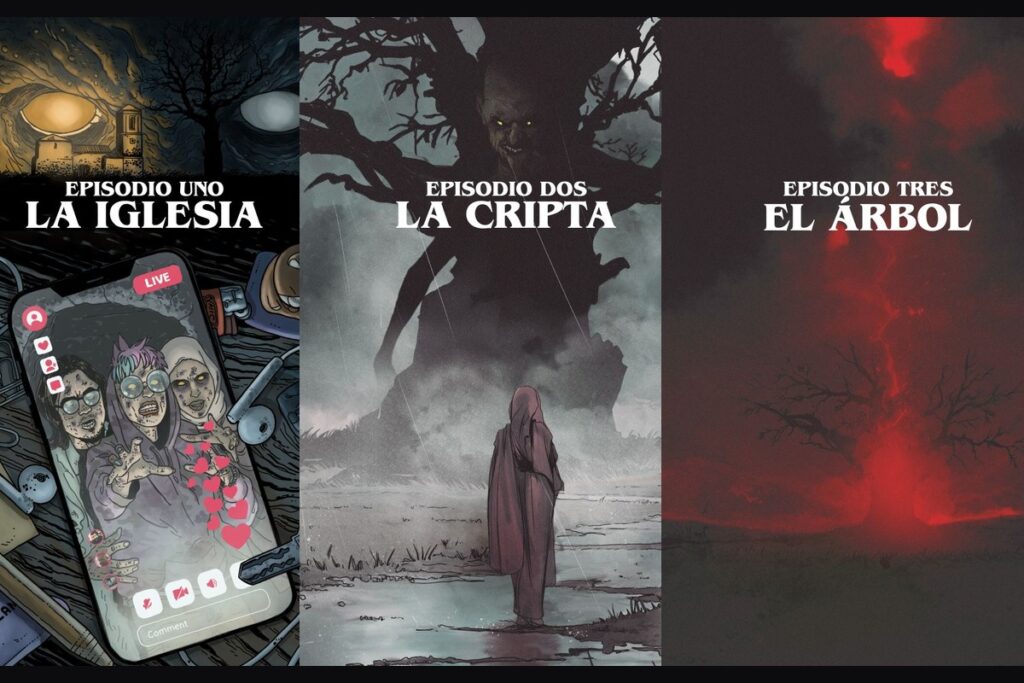
Some jobs land on your desk and you think, «how do I get out of this one?» Others land and you think, «are they seriously going to let me do this?» Dime tu nombre was the second kind.
In case you missed it: Dime tu nombre («Tell Me Your Name») is the Prime Video horror series created by Hugo Stuven with Alejandro Hernández and César de Nicolás. Spain, 1997. A village, Río Blanco; an abandoned hamlet, Fuensanta, where a group of Moroccan seasonal workers settle; and something buried under the church that has been waiting for a very long time. And Dime tu nombre is also the comic we made for Moztros, which I want to talk about today, at some length. Make yourselves comfortable.
A comic for a TV series
Making a comic of a TV series sounds like working with your hands tied: adapt this, don’t touch that, mind the actor. Not here. Here we were given free rein. Carte blanche. «Do whatever you want,» which is the loveliest and most dangerous thing you can say to a writer.
It was thrilling, I won’t lie. We had incredible support behind us: from Moztros, for whom this book was their first original production, with Matías Timarchi and Richie de Bonis pushing from day one; and from the creators of the series, who opened their house to us and let us play with their toys. Being lent the toys is rare enough. Not being told how to play with them is rarer still.
Making a virtue of the problem
There was one small snag, of course. The comic was coming out at practically the same time as the series, and we couldn’t say much about it. One clue too many and we’d have blown the suspense of an entire TV series. Some launch that would have been.
So we went another way: a completely independent story. We didn’t adapt the series. We surrounded it.
On one side, 1595. Four centuries before the events on screen, the hidalgo Íñigo de Mendoza and María la Morisca arrive at that same place, summoned by the Inquisition. Waiting for them is Fray Diego de Quiroga, an inquisitor who doesn’t trust him and trusts her even less. That’s the origin: where the thing sleeping under the church comes from.
On the other, 2025. Almost thirty years after the series, Fuensanta is abandoned again and «the tragedy of the nineties» has become a dark legend. The kind that attracts people like Joy, a paranormal streamer who turns up at the ruins with Pablo and Amira, phone in hand, to see what’s true. Those are the consequences.
Before and after. Prequel and sequel at once. You can read the comic before watching the series or after; we spoil nothing. They share a village, a church and an evil thing, but each tells its own story.
Two eras, two artists
And here comes the best part. Having two timelines meant I could work with two tremendous artists, one for each era.
The sixteenth century belongs to Jorge Esteban Urabayen, with whom I’d already made Espada y Pluma. Jorge draws the Spanish Golden Age as if he’d been there: the roads, the habits, the faces of hunger and fear. Classic, solid, a joy of craftsmanship.
The present belongs to Valentín Ramón, and it’s the complete opposite: colour, noise, phone screens, hearts floating across a livestream while something moves in the background. Valentín was a discovery, and I liked his work so much that he’s now drawing VEINTISIETE with me.
The lovely thing is that the contrast isn’t a whim: it’s part of the story. Each era has its own hand, its own colour and its own way of scaring you, and when the two cross, the comic really works.
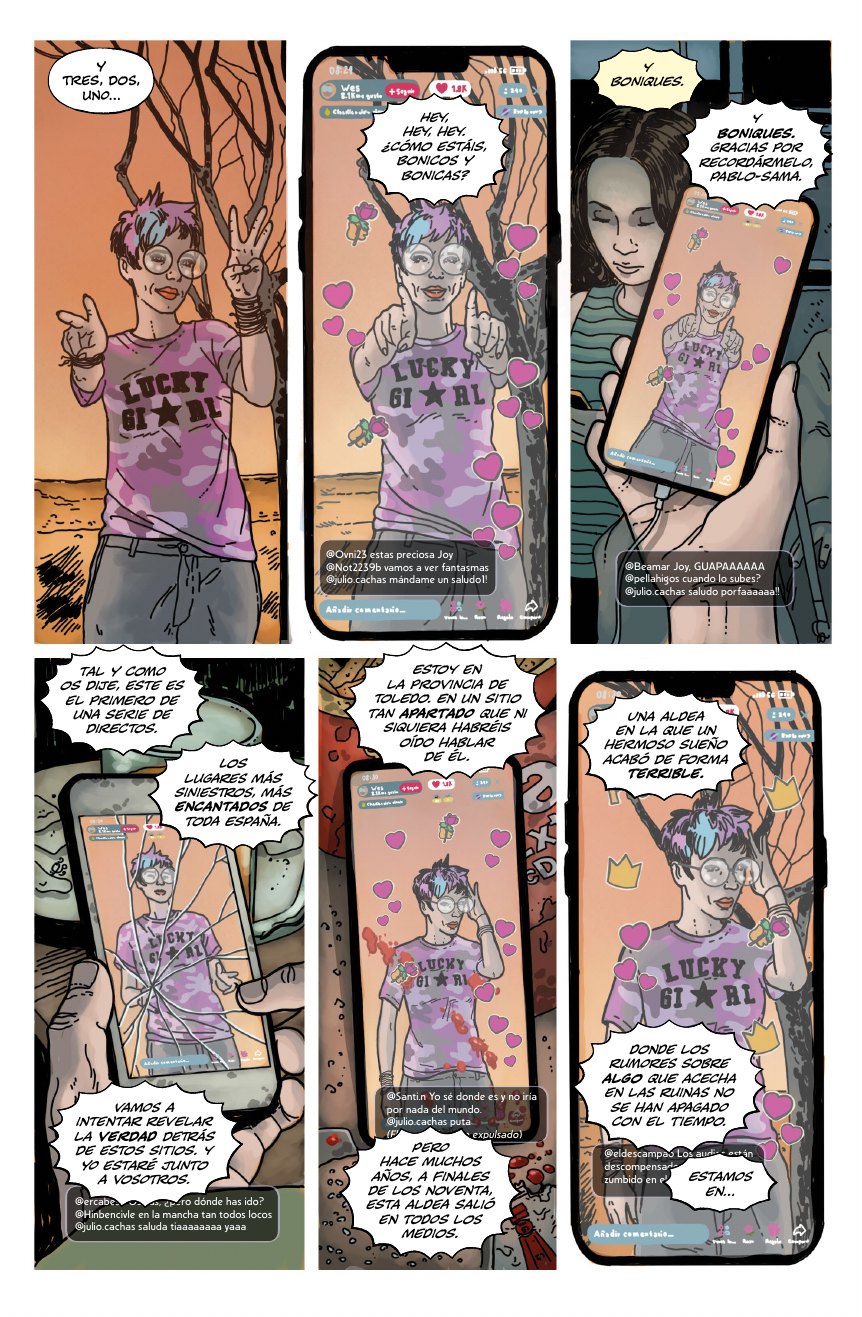
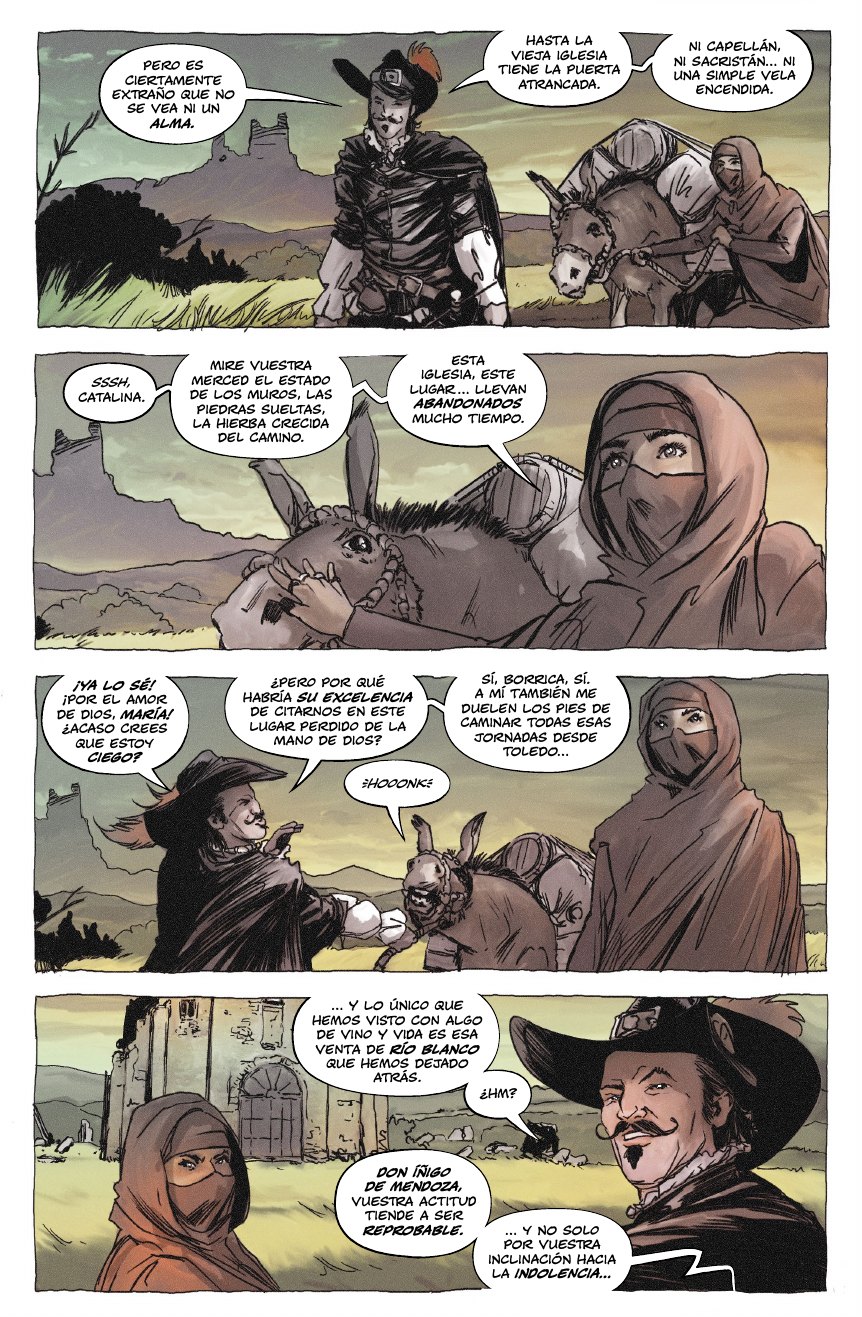
2025 and 1595. Valentín Ramón and Jorge Esteban Urabayen, each in his own century.
The quiet kind of fear
One thing was clear to me from the start: this was a horror comic, and horror in comics has its own rules. We have no jump-scare sounds and no swelling music. We have the page turn, the composition and the silence. So we bet on atmosphere over the monster: calm shots, still characters, things that are there and take you a while to see. A slow fear, the kind that stays.
I sent the two of them a fairly long introduction explaining all this. Seventeen pages, to be precise. You’re about to see how grateful they were.
The WhatsApp group
Because, naturally, coordinating a writer and two artists requires a WhatsApp group. We made one. And what’s in that group is best not shared too widely, for the sake of our careers and one or two friendships.
But since deep down we’re exhibitionists, we put a version in the book’s extras that is… let’s say suitable for all audiences. With the character designs, the references, the sketches and the real tone of the conversation, which is exactly what you’re imagining. Here are those seven pages. I’ve translated the chat for you; the script pages and panels inside it are still in Spanish. Hit the full-screen button, otherwise nobody can read what Jorge says.
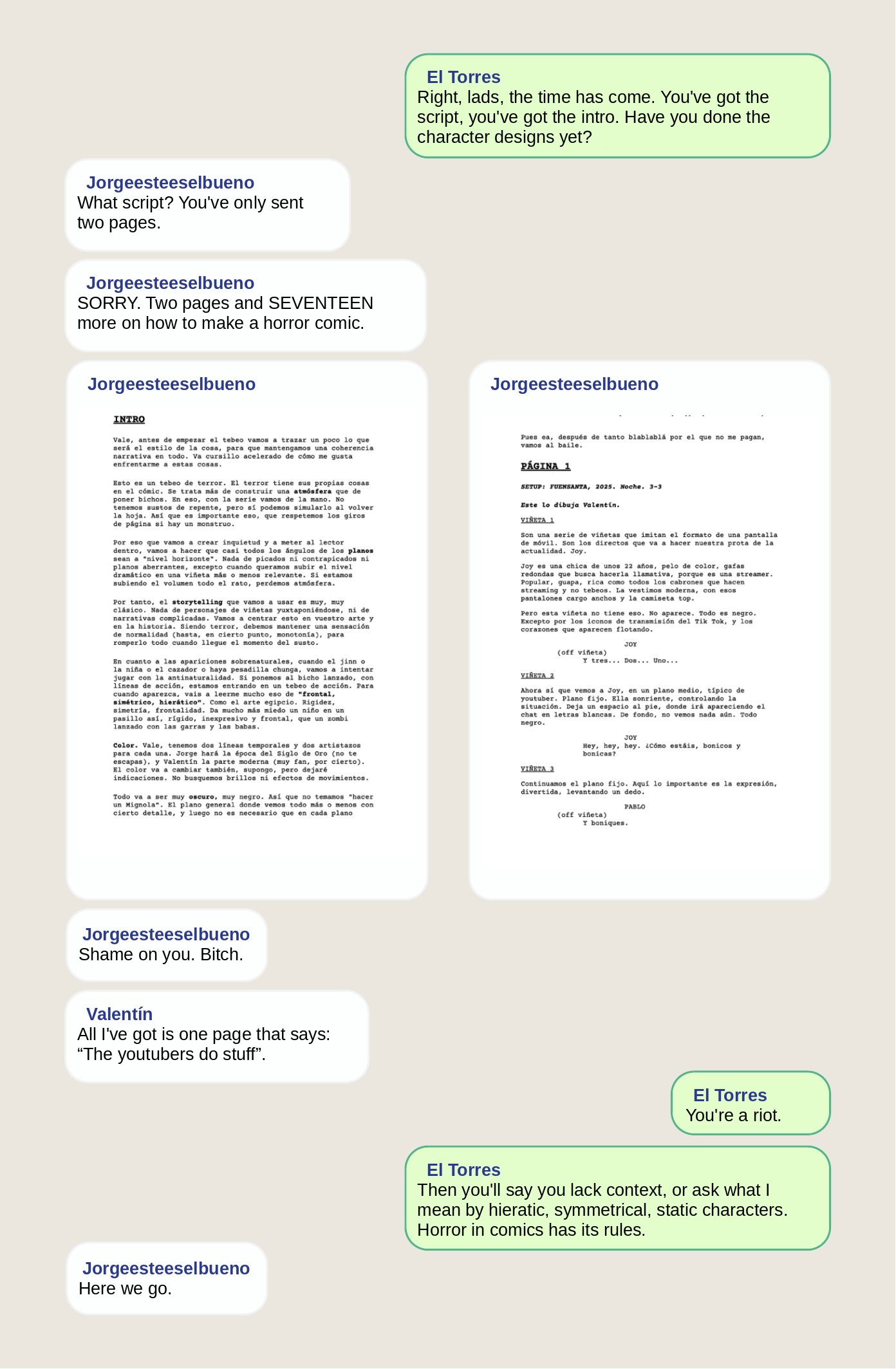
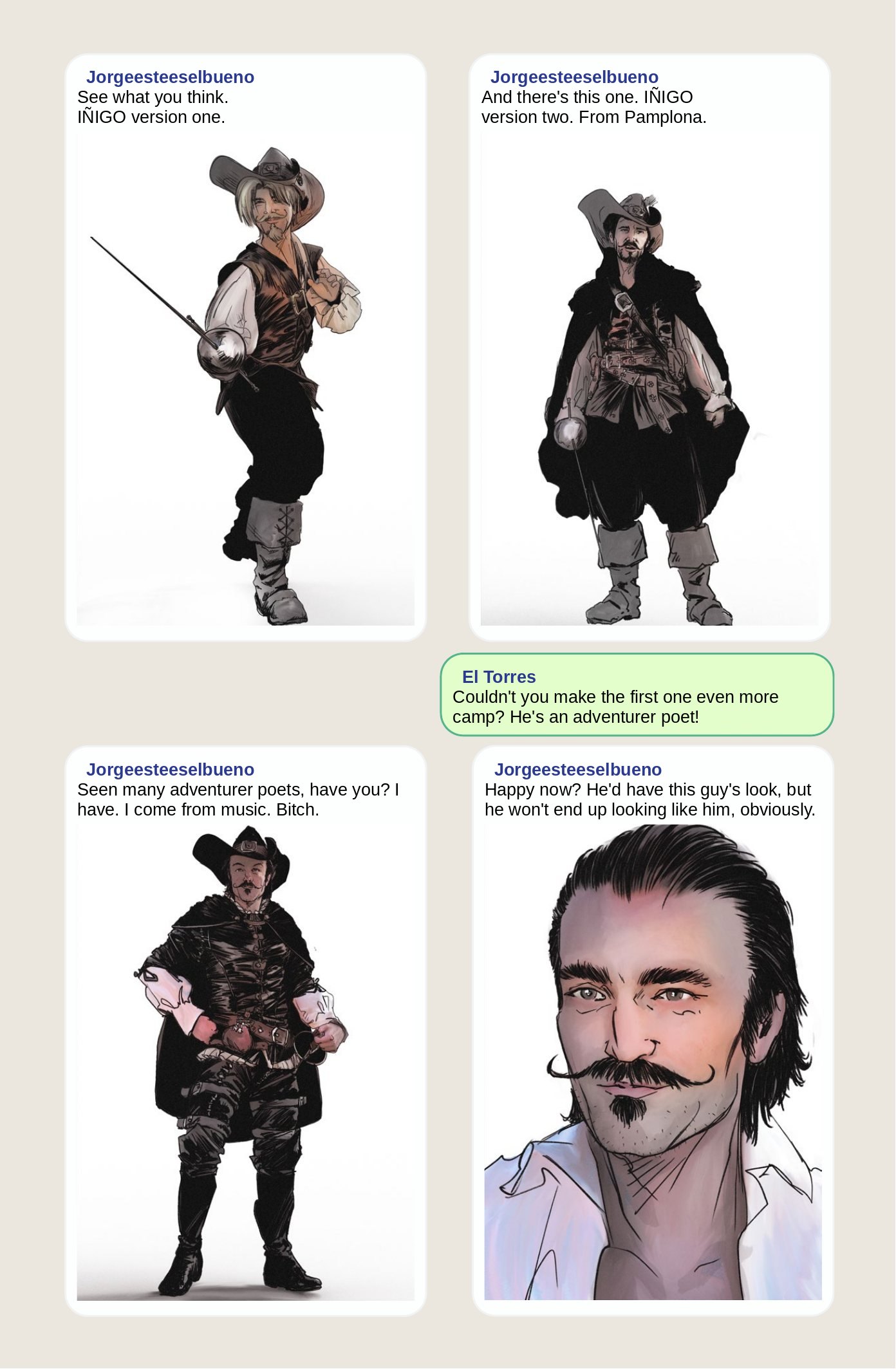
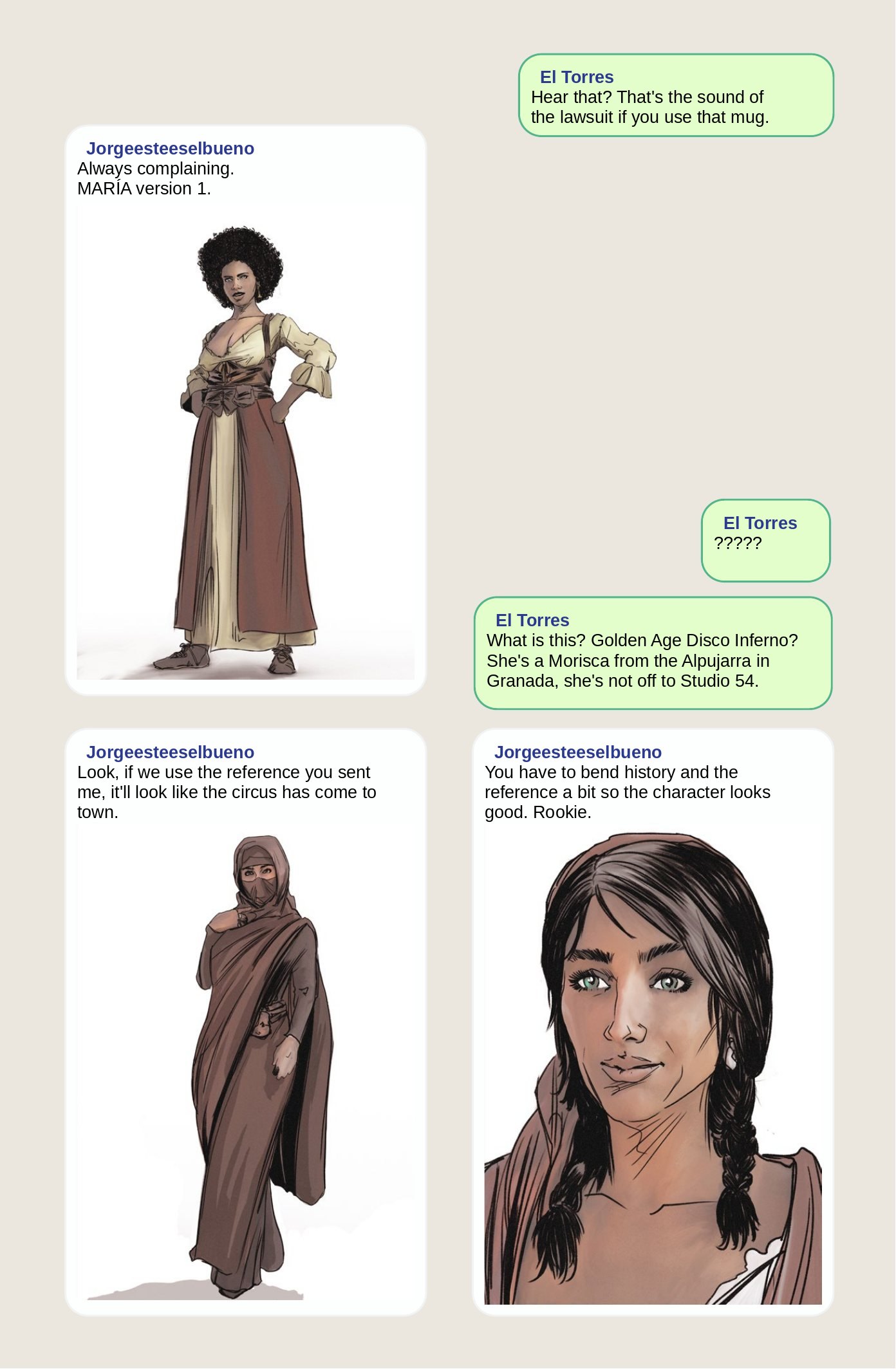
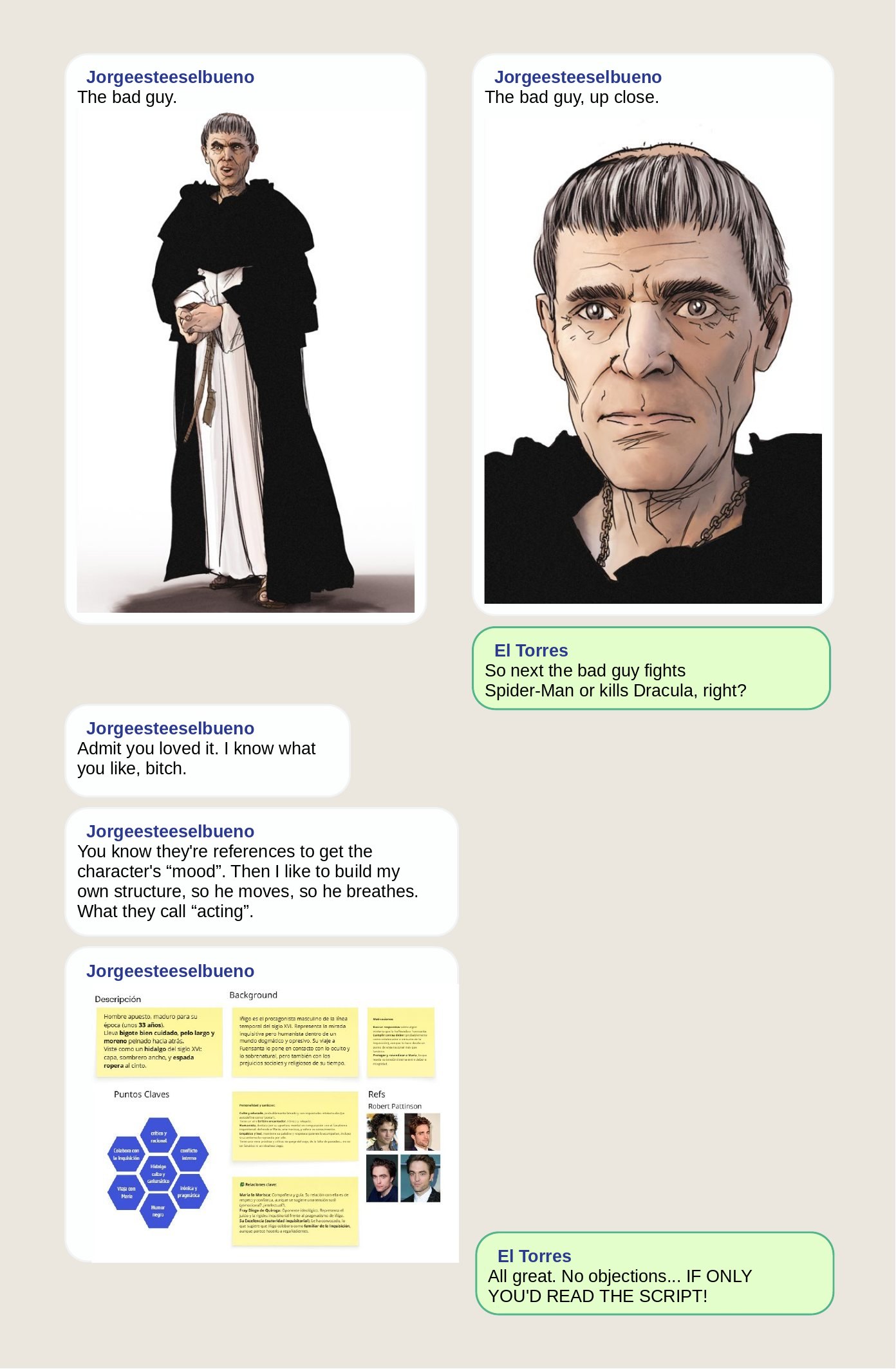
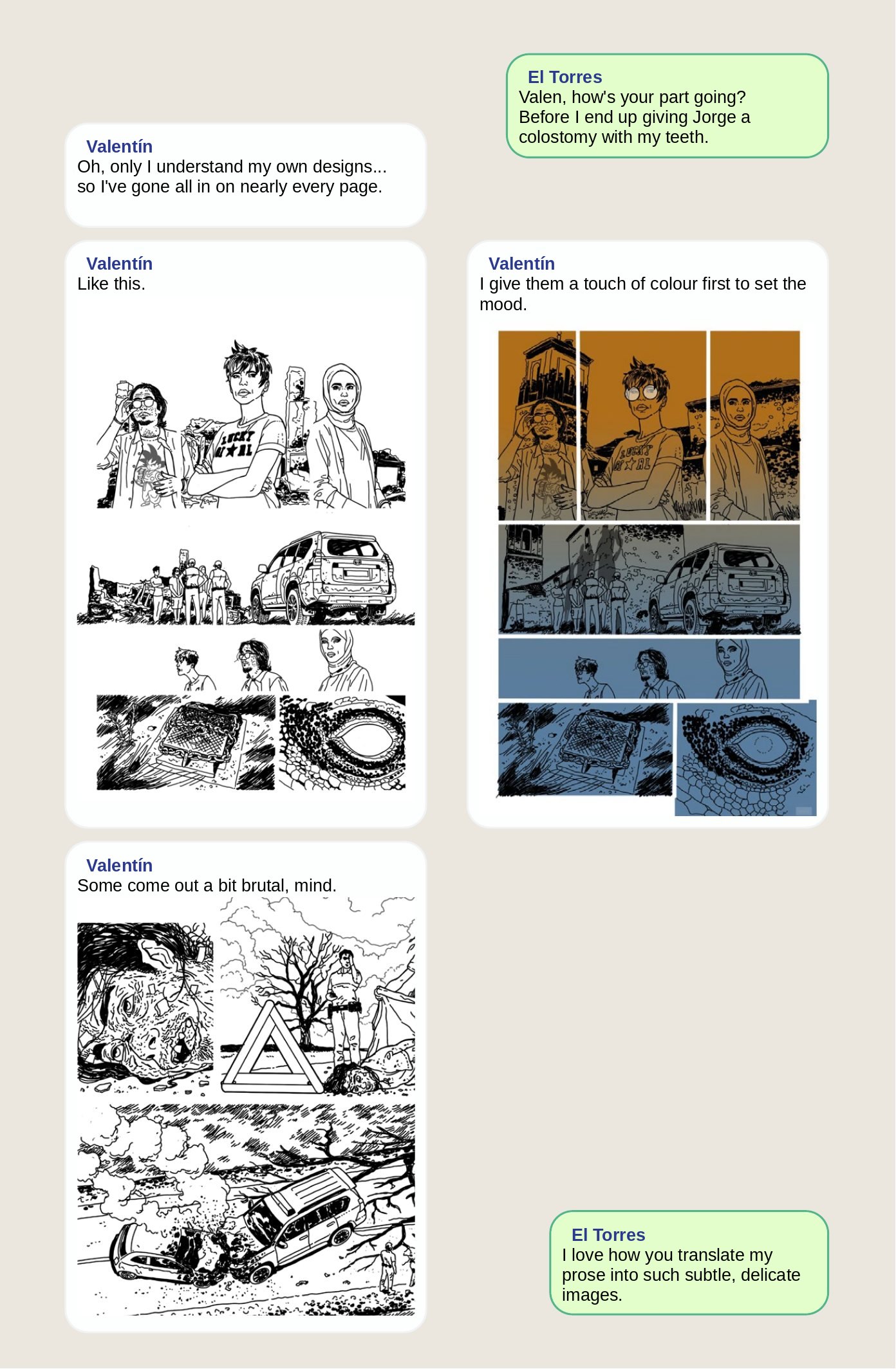
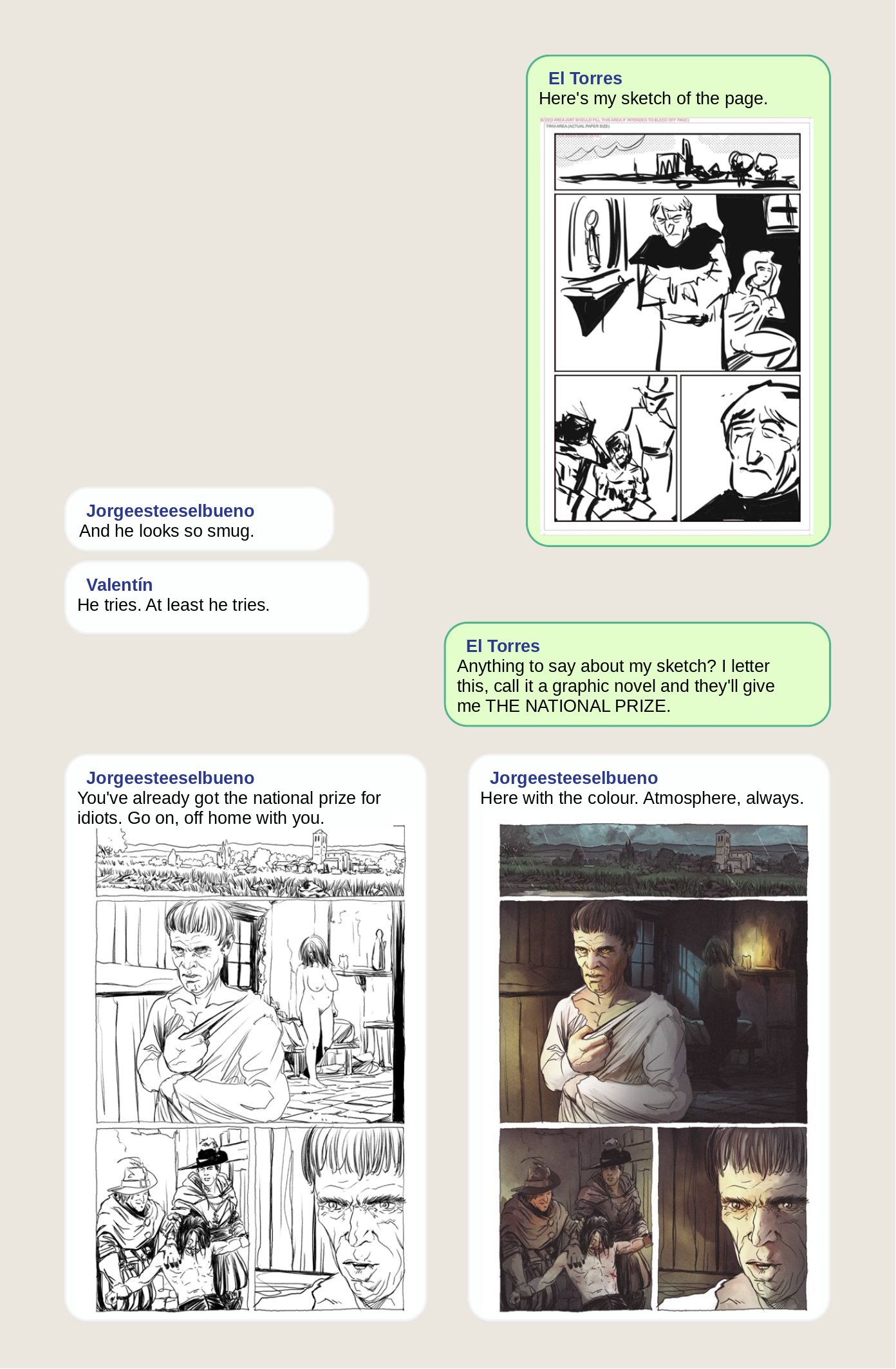
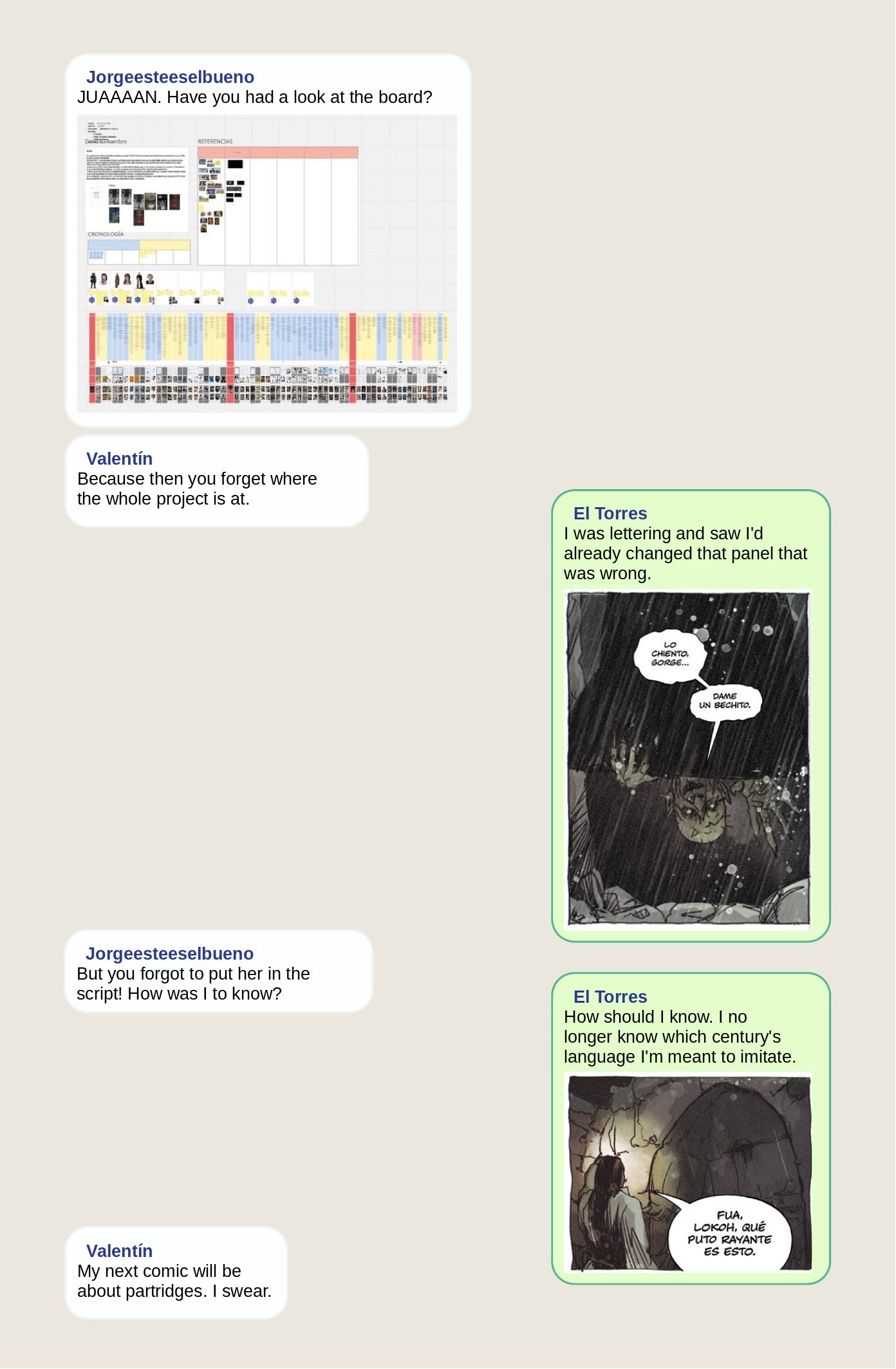
Seven pages from the extras of Dime tu nombre, translated for this post. Use the arrows or swipe, and go full screen to read it properly.
Terribly good fun
When the book came out I said it had been «terribly good fun», and I stand by it. We were lucky: to work with Jorge again, to discover Valentín, to play in Hugo Stuven’s cursed village, and to do it with a publisher that looked after the book down to the last detail. The edition includes plenty of extra material and two afterwords, one by the creator of the series and one by me.
Dime tu nombre is in bookshops in Spain, published by Moztros: hardcover, 96 pages in full colour. You’ll find all the details on the Moztros website.
And if after reading it you feel like visiting an abandoned village with your phone in your hand… don’t say we didn’t warn you.
Dime tu nombre © its respective owners. Comic published by Moztros, based on the Prime Video original series. Written by El Torres. Art and colours by Jorge Esteban Urabayen and Valentín Ramón. Images reproduced for informational purposes.